Learn by Doing: Experiential Learning at Humber Polytechnic
Get ready for your future with work-integrated learning as part of your Humber program.
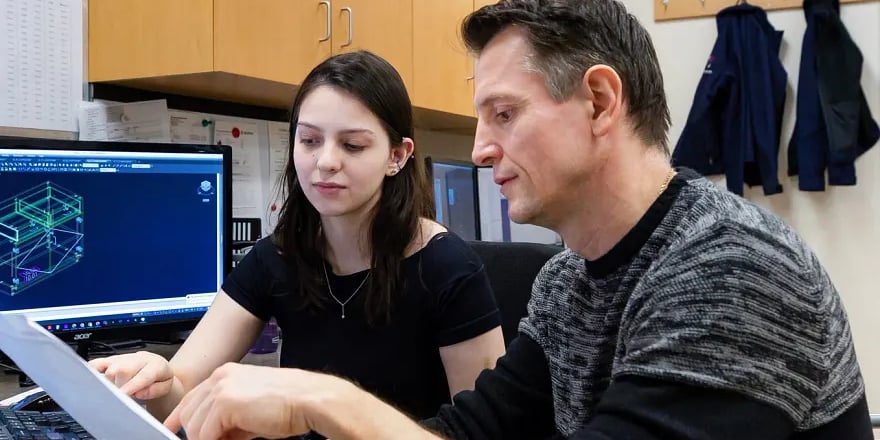
Experiential learning is one of the reasons Humber graduates feel so ready for what comes next. It challenges you to think critically, communicate clearly, and adapt to changing situations which are skills you use in the classroom and in professional settings.
Experiential learning also connects directly to the employability journey described above. By applying your learning in real environments, you begin discovering your edge. You learn how your strengths show up in practice and how your skills can create impact in professional settings.
Learn by doing in ways that prepare you for what comes next
Rather than focusing only on lectures and exams, Humber programs integrate hands-on learning and work-integrated learning (WIL) throughout your education. You collaborate on real projects, solve real problems, and build skills that employers value. This approach helps you connect classroom learning to the world you are preparing to enter.
These experiences help you move from learning concepts to applying them. Along the way, you build the confidence and capability that allow you to discover your edge and see where your learning can take you.
What makes learning at Humber meaningful
- You learn by applying knowledge in real contexts
- You practice teamwork, communication, and problem solving
- You build confidence through repeated experience
What WIL looks like
Work-Integrated Learning (WIL) gives students the opportunity to apply in-demand skills and knowledge in real-world workplaces or community settings. Humber prepares students for WIL from the beginning because these experiences help with career goals and future success.
WIL is coordinated through academic faculties and may be a required component of your program or offered as an option depending on your field of study. It includes a range of structured experiences that go beyond classroom projects to include real tasks with employers, community partners, and organizations.
You will apply what you’ve learned in class and in real-world environments through a wide range of academic, community and industry partnerships. These work-integrated learning opportunities may include field experiences, professional practicums, and co-operative education.
These experiences help students see where their education can lead. Many students gain clarity about their career goals, build relationships with employers, and discover new opportunities within their field.
Examples of WIL at Humber
These experiences help you build a portfolio of real achievements, practice professional behavior, and begin forming career networks while you are still a student.
Field experience
A field experience offers students an opportunity to engage in intensive experiences related to their field of study or career goals to build their skills, knowledge and abilities. Field experiences may be paid or unpaid.
Professional practicum
Programs requiring a professional practicum offer practice-based experience or work hours for a professional license or certification. Students work under the direct supervision of an experienced professional. Placements are unpaid.
Co-operative education (co-op)
Students in co-op programs gain experience through paid work terms in their field of study that become progressively more complex as their skill level increases.
Optional co-operative education (co-op)
Students in co-op programs gain experience through paid work terms in their field of study that become progressively more complex as their skill level increases. The co-op portion of this program is optional.
How WIL boosts your learning and career confidence
Work-Integrated Learning is a powerful way to accelerate your transition from student to professional. Whether you are completing a co-op term, a practicum, or an internship, you are practicing the skills that matter in your field and gaining experience that helps you feel confident stepping into your first job. These experiences also help you better understand your strengths, interests, and professional goals. Many students say this is where they truly discover their edge and see how their education can translate into real impact. It gives you:
- Real career experience before graduation that helps your resume stand out.
- Professional development including workplace skills and networking opportunities.
- Connections to employers that may lead to future jobs or references.
- Support from advisors and faculty to help you succeed in WIL placements.
Putting it all together
Experiential Learning and Work-Integrated Learning are not add-ons at Humber. They are a core part of how your education prepares you for work and life after graduation. The combination of classroom learning, real assignments, workplace experiences, and support from faculty and advisors gives you a distinct advantage as you move toward your career.
By the time you graduate, you have more than knowledge. You have experience, confidence, and a clearer understanding of where your skills can take you. This is learning that connects directly to your future and helps you build confidence, capability, and momentum.
Ready to see it in action?
Explore programs with experiential learning and WIL opportunities!
Check out examples of WIL at Humber